
A Family-Style Science Study
Forests are some of the most diverse and fascinating ecosystems on Earth. From towering conifer forests to colorful deciduous woodlands, these habitats are filled with incredible plants, animals, and natural processes waiting to be explored.
Our Forest Biome Unit was created to help families do just that.
Designed for family-style learning, this study invites children to discover the wonder of forests through living books, engaging articles, notebooking, hands-on activities, map work, projects, and meaningful discussions. Whether you’re teaching a single child or gathering multiple ages around the table, the lessons are flexible enough to fit a variety of homeschool styles and schedules.
One of the things that makes this study unique is its balance between rich learning and practical implementation. While we love learning through living books, we also know how difficult it can be to track down an endless list of library resources. For that reason, many of the lessons include original articles that we wrote ourselves, allowing families to explore important concepts without needing to source dozens of additional books.
Throughout the unit, students compare two very different forest ecosystems—deciduous forests and coniferous forests—while learning about featured forests from around the world, such as the mysterious Sherwood Forest. Students will explore the remarkable role of keystone species such as wolves, whose absence can have far-reaching effects on the forest, and beavers, whose dams create habitats that support entire ecosystems. Along the way, they build geography skills through map work, practice observation and narration through notebooking, and engage with the material through a variety of hands-on experiences.
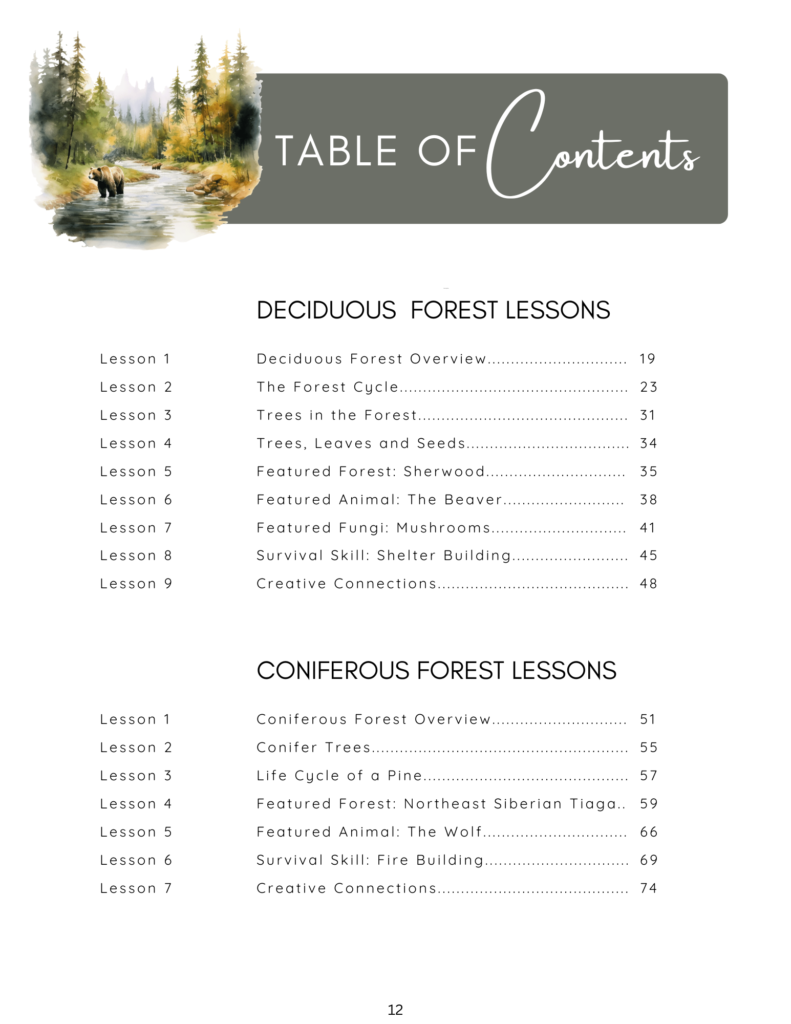
The Forest Biome Unit is also connected to the rest of our biome studies through several optional ongoing projects. As students move through the biome series, they create a Nature’s Patchwork Quilt, build a science copywork dictionary, and gradually map the world’s major biomes on a large poster-board map. These projects help children make connections between ecosystems and see the bigger picture of how Earth’s biomes fit together.
Before beginning this study, we highly recommend completing our free Introduction to Biomes lessons available on the blog and is also included with your purchase of the Forest Biome Unit Study. These foundational lessons introduce key concepts that will be revisited throughout all of our biome units and help students get the most from their learning experience.
Most of all, our goal is to help families learn together. We want children to wonder, explore, create, and connect with the world around them while developing a deeper appreciation for God’s incredible design in creation.
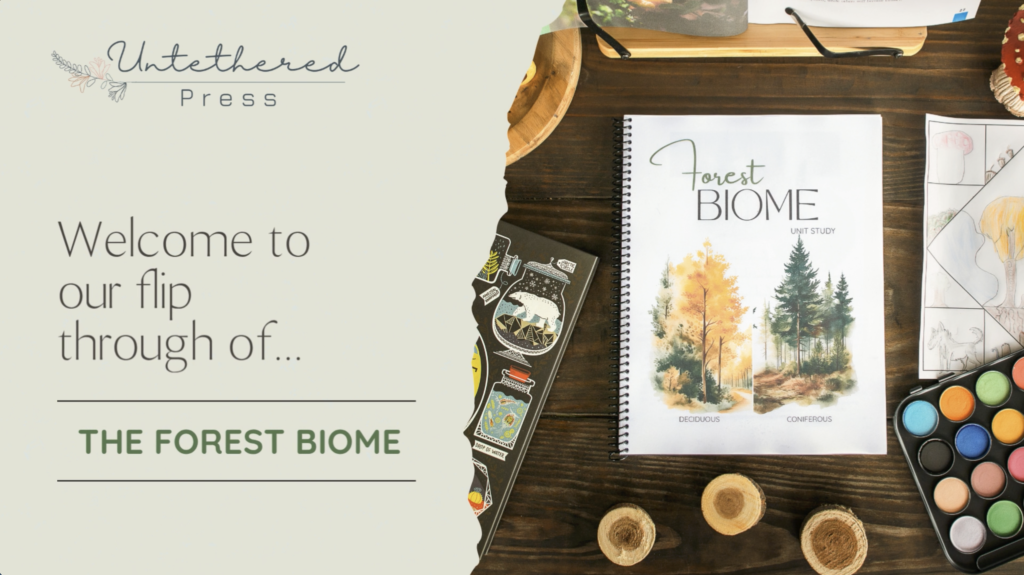
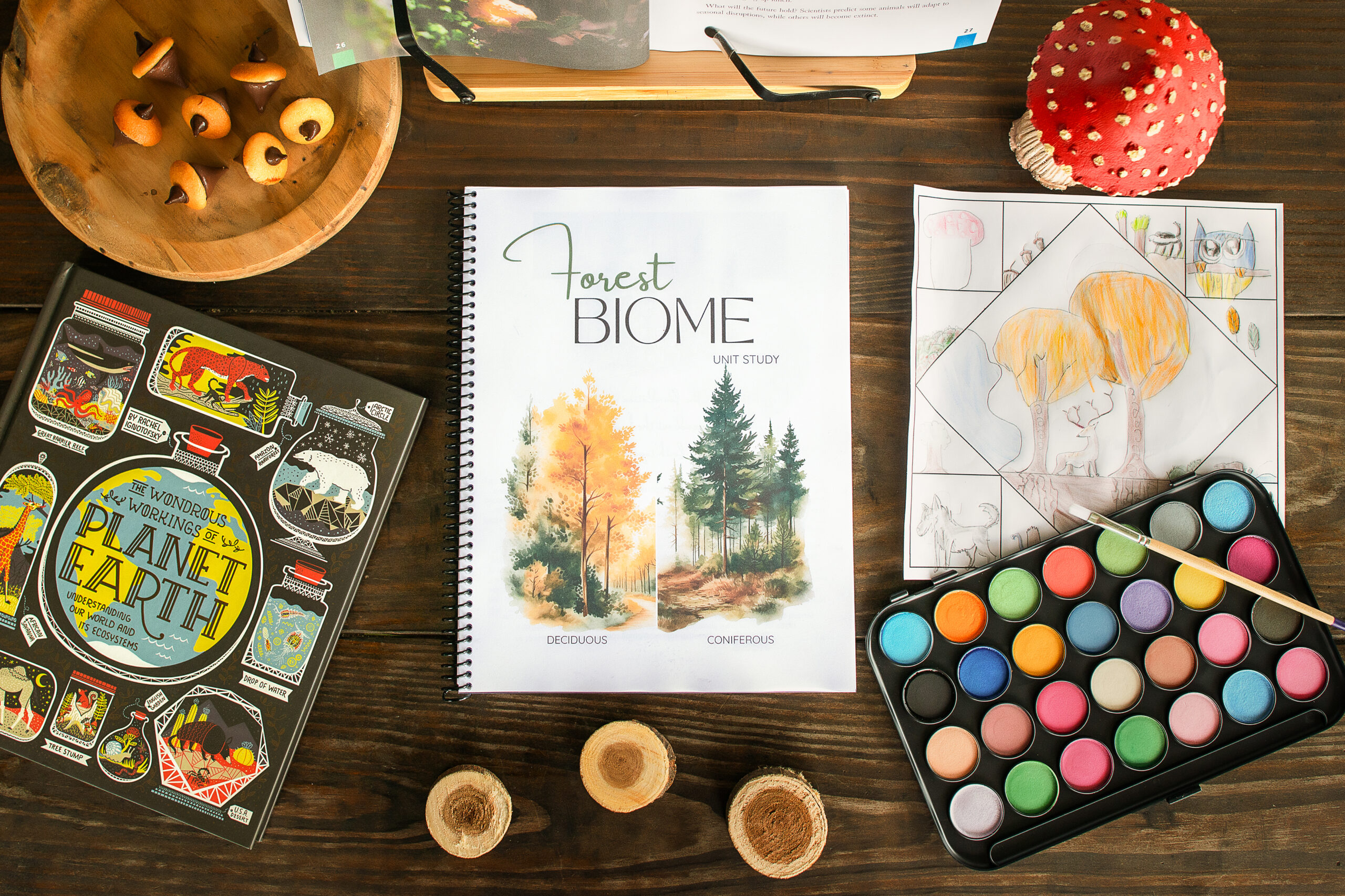
If you’d like a closer look inside the Forest Biome Unit, be sure to watch the complete video flip-through below.
Blog
This section provides an overview of the blog, showcasing a variety of articles, insights, and resources to inform and inspire readers.
-
Fun Ways to Kick Off Your Homeschool Year
There is something special about the beginning of a new homeschool year. Fresh notebooks. New pencils. Exciting plans. A brand-new stack of books waiting to be explored. It can be tempting to…
-
Exploring the Forest Biome
A Family-Style Science Study Forests are some of the most diverse and fascinating ecosystems on Earth. From towering conifer forests to colorful deciduous woodlands, these habitats are filled with incredible plants, animals,…
-

A Summer of Connection
Making Memories that Last As summer approaches, it is easy to feel pressure to make it magical.Social media is filled with elaborate vacations, expensive attractions, and endless lists of activities. Before long,…

Leave a Reply